Identity
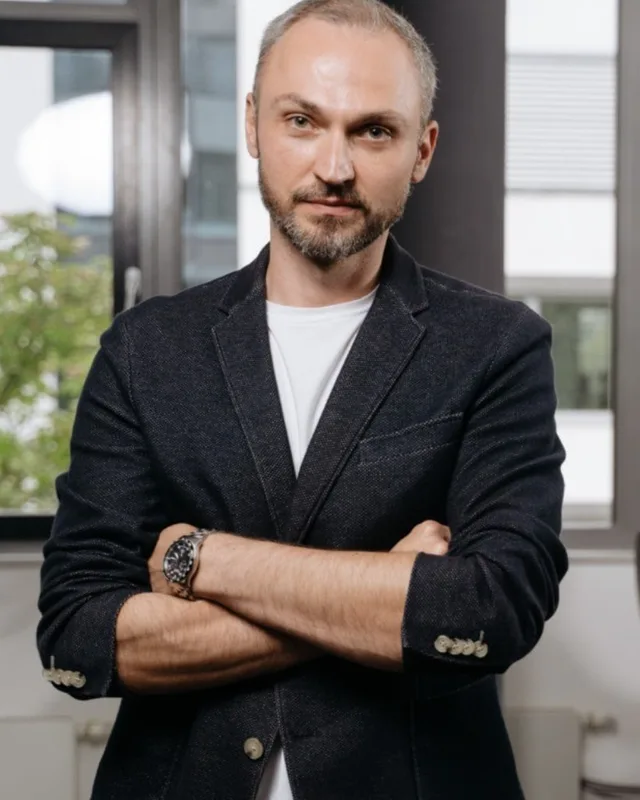
Andrei Lisikov — Technology Executive
Engineering depth. Business ownership.
Andrei Lisikov is a Technology Executive whose career progressed from software development and architecture through CTO responsibility into company leadership. As Managing Director of WiredMinds, an established B2B SaaS business now part of Dealfront, he connects product, engineering and applied AI with company economics, company-side due diligence and post-merger integration.
His experience spans enterprise technology, automotive, mobility, industrial technology and B2B SaaS, with selected technology mandates in Switzerland.
From technology responsibility to company responsibility
Technical judgment matters most when it improves more than the technology itself.
At WiredMinds, Andrei progressed from leading technology to leading across product, platform, engineering and infrastructure while carrying company responsibility for data, customers and partnerships, commercial initiatives, finance and operations. The work combined modernization with new product capability and a clearer connection between technology investment and business priorities.
Under his leadership, WiredMinds returned to profitability and was successfully acquired by Dealfront in 2025. His role in the transaction centered on company-side legal, financial and technology due diligence. He continues to carry responsibility for key integration topics after the acquisition.
Build. Scale. Transform.
Build
Products and capabilities that connect technical possibility with a real customer and business need—from B2B SaaS product development to AI-enabled industrial software.
Scale
Platforms, engineering structures and operating models that can support greater product ambition without losing reliability, economic discipline or decision clarity.
Transform
Established technology businesses where legacy, organization, commercial priorities and technology economics have to move as one system.
The motif describes Andrei's operating scope. His perspective comes from carrying line and company responsibility through these decisions.
Where the experience is most relevant
- An established software or technology-enabled business is modernizing its product and platform foundations.
- Product, engineering, organization and commercial priorities have drifted apart.
- AI adoption has moved beyond experimentation and now requires product, data, operating-model and investment decisions.
- A transaction requires credible company-side diligence and continuity into integration.
- Technology needs to contribute more clearly to profitable growth, execution quality and long-term company value.
Technology with commercial consequence
Andrei's experience includes expanding a SaaS product portfolio, contributing to new revenue streams, winning customers, building partnerships and connecting platform decisions with commercial priorities. It also includes company-wide financial and operating responsibility and the return of an established SaaS business to profitability.
That combination is central: architecture without business ownership can remain theoretical; business ownership without technical depth can miss the decisions that determine product speed, risk and economics.
Applied AI, at executive level
AI appears in Andrei's work as a product and operating capability within his wider executive responsibility.
His experience includes AI transformation in software engineering and operations, an AI-feasibility mandate for Perspectix AG in complex industrial configuration, and product and business-model work for a Zurich-based MarTech venture developing an agentic-AI platform.
The questions are practical: Where does AI create a better product? What data, control and integration are required? How does it change engineering economics? Which attractive demonstrations should not become production commitments?
The selected industrial-software and agentic-AI mandates show the same boundary: AI must become a controlled, maintainable product or operating capability—not a collection of tools.
Industrial AI Production Readiness Model sets out the production decision framework: probabilistic capability where it creates value, deterministic validation where correctness is non-negotiable, and human ownership where accountability cannot be delegated.
Perspective
Modernize, re-platform or rebuild: what evidence should decide? examines how customer continuity, operating capability and technology economics should shape the modernization path of an established software business.
Continue
For the full progression from software and architecture into company leadership, read the profile. For relationship-accurate evidence across SaaS, enterprise technology and selected Swiss mandates, explore experience.
For a relevant executive, transformation or transaction conversation, contact Andrei with a short note on the company context and the decision at hand.